
Introduction
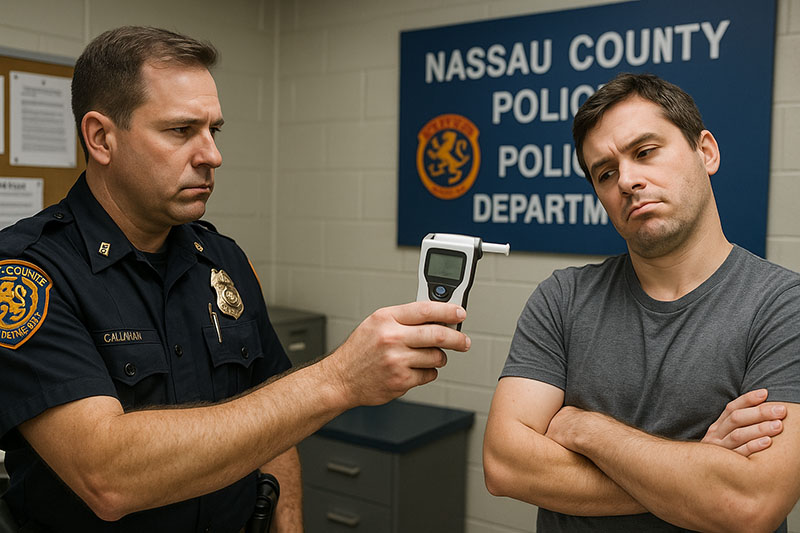
Driving While Intoxicated (DWI) investigations in New York often involve the use of a breathalyzer, to measure a driver’s blood alcohol content. Many drivers are unaware of the serious consequences that can result from refusing to take this test when requested by law enforcement. This article provides a comprehensive analysis of what happens if a motorist refuses the breathalyzer during a DWI investigation in New York, and why strategic decisions at each stage are critical for protecting their rights and driving privileges.
Immediate Consequences of Refusal
Refusing the breathalyzer test in New York comes with administrative penalties, regardless of the outcome of the underlying DWI criminal case. The most significant immediate consequence is a one-year revocation of a driver’s license. This revocation is triggered by the refusal itself, not by a conviction for DWI.
At the arraignment, the first court appearance after a DWI arrest, the judge will suspend the arrestee’s driver’s license pending a formal hearing with the Department of Motor Vehicles (DMV). If the “Refusal Hearing” is not scheduled within fifteen days, the driver is entitled to receive his license back pending the rescheduling of a hearing.
Strategic Importance of the DMV Refusal Hearing
The DMV refusal hearing is a crucial opportunity for drivers. Even though the odds of winning the hearing are not high, there are several strategic reasons to conduct it rather than waiving it:
- Delaying Revocation: By holding the hearing rather than waiving it, a motorist may delay the start of your one-year license revocation by filing an appeal of an adverse decision from the hearing. This delay can be especially important if they need time to address work or family obligations, or if driver wants to resolve the criminal DWI case first.
- Gathering Sworn Testimony: The refusal hearing allows the attorney to question the arresting officer under oath. This can provide valuable information about the circumstances of the arrest, which may be useful in defending against the DWI charge in criminal court.
- Cross-Examination: The hearing is one of the few chances to cross-examine the officer before the criminal case proceeds. Testimony obtained here can be used to challenge the officer’s account or credibility later during a trial. The Appeal Process: Delaying Revocation and Protecting Driving Privileges
If the DMV judge rules against the motorist at the refusal hearing, they will have the right to appeal the decision. Filing an appeal can further delay the start of your one-year license revocation. This delay can be strategically important, as it may allow a motorist to maintain their driving privileges while the criminal case is ongoing. As we will see below, there is no eligibility for a conditional license on a DWI refusal revocation, until the underlying DWI is resolved.
Restricted License Limitations During Refusal Revocation
Unlike some DWI-related suspensions, a refusal revocation in New York does not allow for a conditional or restricted license. This means that, if a license is revoked due to a refusal, the motorist cannot drive for work, school, or any other reason during the revocation period. The one caveat here is that there is no eligibility for a conditional license on a DWI Refusal revocation until the underlying DWI charge in criminal court is resolved. Some DWI’s could take as much as a year to resolve. Timing is therefore critical: delaying the start of the revocation through the hearing and appeal process can permit a motorist to drive during the time their criminal case is pending in the court and ultimately shorten the amount of time a motorist has no privileges, conditional or otherwise to drive.
Example 1 (waiver of refusal hearing): Here a criminal defendant is charged with a misdemeanor DWI and faces a six-month revocation of his license if he is convicted. In this example the arrestee is indeed convicted of the charge after a year of court conferences, hearings and trial. If the defendant initially waived his hearing or failed to appear, his license would be revoked for the year his case was pending with no privilege to obtain a conditional license. He would then have an additional six-month revocation from the underlying DWI conviction but would then be eligible for a conditional license during that period of revocation. [1]
Example (Refusal hearing is conducted with an unfavorable ruling) – Here the motorist has lost the refusal hearing, and his license has been revoked for one year. However, he will be able to obtain his license back pending an appeal of the Refusal proceedings. This will give the motorist full driving privileges while the underlying DWI is pending. Under the same facts of the first example, the defendant-driver’s case in the criminal court takes a year to process through the court system and he is ultimately convicted. At sentence his license to driver is separately revoked for six months. The driver may then withdraw his appeal on the refusal and run the two revocations concurrently resulting in a revocation period of a year, with an eligibility for a conditional license during the entire year. For the driver that requires a car to get to and from school or work, it is essential here, not to waive the hearing.
Risks of Waiving the Refusal Hearing
Some drivers may consider waiving the DMV refusal hearing in hopes of resolving the matter quickly. However, waiving the hearing has several significant risks:
- Immediate Revocation: Waiving the hearing results in an immediate one-year license revocation, with no opportunity to delay or contest the penalty.
- Loss of Appeal Rights: By waiving the hearing, you also waive your right to appeal the DMV’s decision, eliminating any chance to delay the revocation or overturn it.
- Extended Revocation Periods: In some cases, waiving the hearing can result in a longer period without driving privileges, especially if it coincides with other suspensions or revocations related to the DWI case.
Best Practices: Conducting and Appealing the Hearing, Seeking Legal Counsel
Even when the prospects of winning the DMV refusal hearing are low, it is almost always in a driver’s best interest to conduct the hearing and file an appeal if necessary. Doing so provides opportunities to delay the revocation, gather evidence, and protect the motorist’s rights. Moreover, because the consequences of refusal are severe and the process is complex, contacting an experienced DWI attorney as soon as possible after an arrest is essential. An attorney can help the motorist navigate the DMV and criminal processes, represent them at the refusal hearing, and advise on the best strategies for each client’s unique an individual circumstances.
Conclusion
Refusing the Breathalyzer test during a DWI investigation in New York triggers automatic and serious consequences, including a one-year license revocation and immediate suspension at arraignment. However, by understanding the process, exercising the right to a DMV refusal hearing, and appealing negative outcomes, a driver can delay the loss of their license and strengthen their defense in the criminal case. Since a refusal license revocation does not allow for a restricted license, it is critical to plan and seek legal advice as soon as possible. When facing a DWI refusal situation, prompt action and informed decision making are a motorist’s best tools for protecting their driving privileges.
[1] Note: even if the motorist is convicted in less than a year, during the six-month revocation on the underlying charges, and the remaining time on the DWI refusal revocation, the motorist is eligible for a conditional license.